
Overview
A clearer operating layer for coral reef research.
ReefNetAI is a comprehensive platform for coral reef monitoring and marine survey workflows. It helps teams collect, organize, review, and analyze image-based and field-linked data inside one secure, scalable system.
AI-assisted analysis
Use segmentation and image review workflows to turn reef imagery into structured observations that are easier to compare, validate, and act on.
Collaborative research
Keep surveys, reviewers, project notes, and outputs in one shared workspace so teams can collaborate without losing context.
Visual reporting
Bring together maps, environmental context, and project-level outputs so findings are clearer to communicate across science, operations, and conservation partners.
Built for
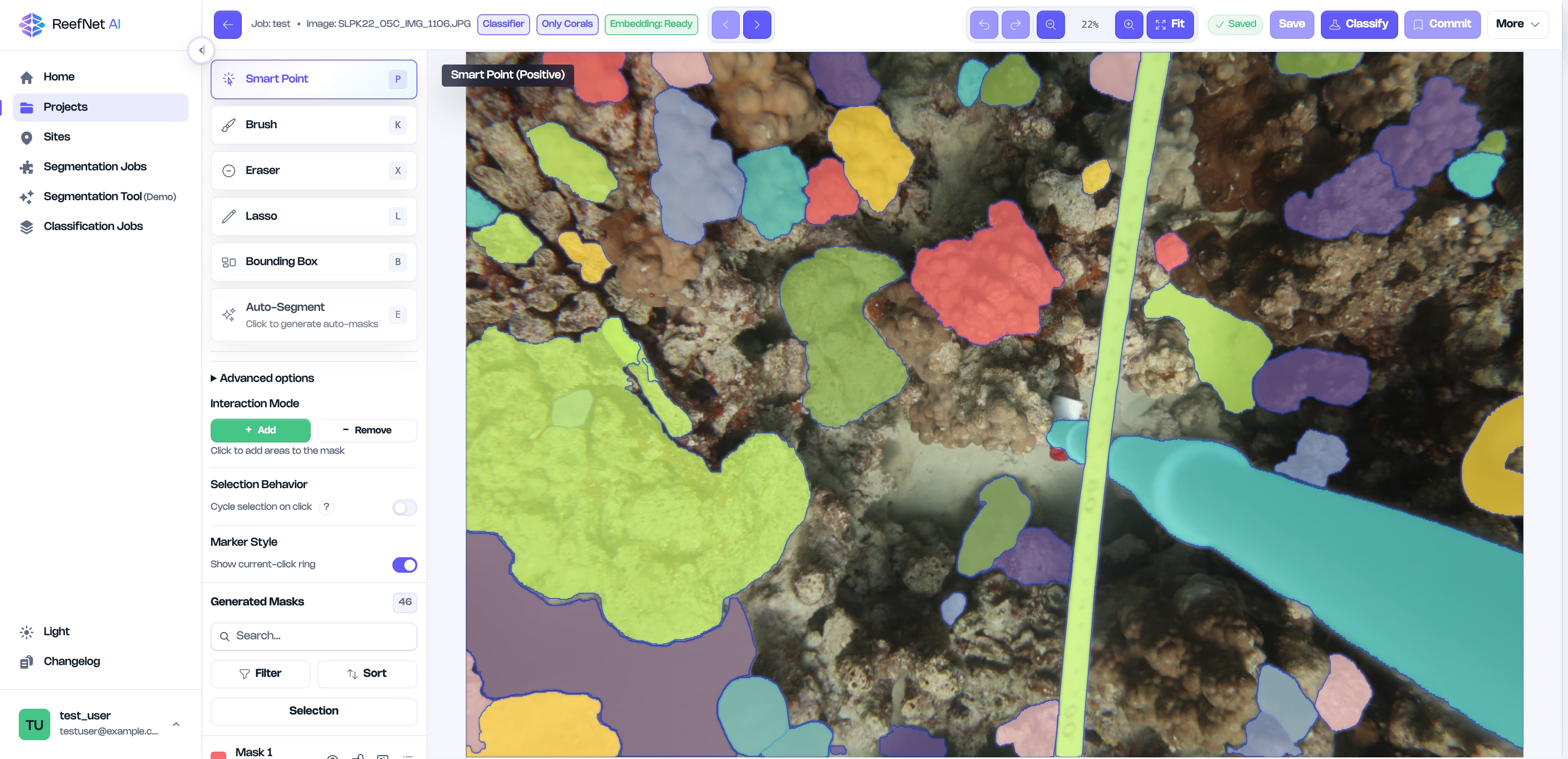
ReefNetAI Segmentation tool.
Platform
One operating layer for reef monitoring and coordinated action.
ReefNetAI brings imagery, analysis, environmental context, and project coordination into one workflow so reef teams can move from observation to decisions with less friction.
Segmentation
Turn reef imagery into structured observations
Use AI-assisted segmentation workflows to convert raw reef imagery into consistent benthic observations that are easier to review, compare, and act on.
Projects
Keep sites, surveys, and outputs in one workspace
Track project activity across restoration sites, manage review flows, and keep field operations aligned without scattering work across disconnected tools.
Observation
Live coral cover and benthic classes linked to survey context.
Monitoring signal
Environmental variables stay attached to the record, not in a separate spreadsheet.
Environmental Context
Keep monitoring data tied to place and conditions
Bring survey location, depth, temperature, and monitoring notes into the same flow as image interpretation so the ecological picture stays intact.
Coverage
Scale from single sites to regional locations
Designed to support local monitoring teams, NGOs, and policymakers across distributed reefs and long-running restoration efforts.
Coordination
Move from analysis to action with less overhead
Structure review, validation, and follow-up work so scientific teams can stay focused on outcomes rather than admin overhead.